Judges in the U.S. make important decisions every day that can affect the lives of all citizens. If you’re going to run for judge, you will need to know what is needed to campaign for the office.
Here are some ideas of what to expect and how to prepare if you’re thinking about running a campaign for judge.
What types of judges are elected to office?
The role of a judge is to serve the public by making impartial decisions. Judges that are elected by voters serve for a limited period of time. While on the bench, they are expected to act as the unbiased authority on the law.
Some judges are elected by the people of the county they represent, but many of the most influential judges at the state level are appointed or approved by senior politicians. The types of judges that may run for office include:
- Municipal court judges
- County court judges
- Magistrates
- Justice of the peace
For locally elected judges, the specific rules regarding elections vary by state. Variables include the length of the term, when elections occur, and the maximum number of terms a judge can serve.

County and municipal judges and magistrates are often elected by voters.
What skills do you need to be a judge?
The qualifications for becoming a judge depend on the state and the particular court. Many judicial offices require a law degree, an active law license, and several years of legal experience. Others do not.
For example, Texas requires district judges to meet specific legal-experience requirements, but its constitutional county judges are not required to be attorneys. Before running, confirm the qualifications for the exact judicial office you’re seeking.
The qualities and skills of successful judges include:
- The ability to think logically and analytically
- To understand written case law
- An understanding of the human condition
- The ability to be unbiased and impartial
- To be respectful towards all parties in court
- To be patient, have a sense of humor, balanced, fair and open minded.
Running for Judge? Make Your Qualifications Easy to Find
Voters may know little about the candidates running for judge. Your campaign website should make it easy to review your legal background, courtroom experience, qualifications, and the specific judicial office you’re seeking.
Online Candidate provides websites designed for judicial campaigns. We can build and set up your site, or you can create your own using our Monthly Campaign Website Builder starting at $29/month.
What does it mean to be a “Good” judge?
A good judge is someone who can take in information, organize it, and form a decision. This person would have to be unbiased, open minded, logical, and fair to all parties involved in a case.
Why do you want to run for the position?
There may be a number of reasons why you are interested in becoming a judge. It may be to hold a position of prestige and power. It might be because you care about the legal system and want to make it work better. At some point, you will be asked that question by a voter or reported. It’s better to have your reasons prepared ahead of time.
Common reasons why people run for judge:
- You want to play part in making the legal system work better for everyone.
- You value fairness and accountability in applying the law.
- You want to stand up for what is right, even if it not popular with public opinion or powerful moneyed interests.
- You want to see that the principles of the Constitution are upheld within the courts.
Whatever your reasons, you should be authentic in what you will stand for as a member of the judiciary.
Are judicial elections partisan or non-partisan?
Judicial elections may be partisan or nonpartisan, depending on the state and court. Some judges also face retention elections, where voters decide whether they should remain in office.
Even in partisan elections, judicial candidates must follow rules intended to protect judicial independence and impartiality. Check how candidates qualify for the ballot, whether party affiliations appear, and what political activities are permitted.
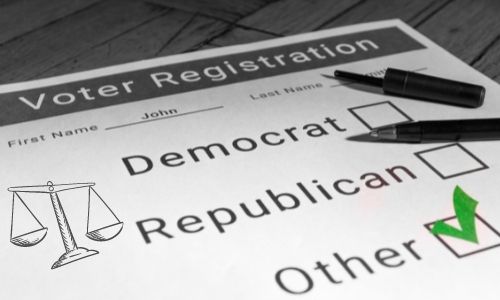
Judicial elections are often non-partisan.
What are the requirements for becoming a judge?
The process of running for judge is not easy. There are certain requirements that must be met.
In most states, eligibility requirements depend on age, residency, and criminal conviction. Some states have additional requirements to run for office.
There are states which require the candidate to be a lawyer. Other states require the candidate only to have an active law license.
Additional requirements may include that the candidate must be a citizen, that they be a practicing lawyer or judge, and that they reside in the district where they seek the office.
And on top of that, they must win their election.
Running an effective election campaign
In some ways, running a judicial campaign is similar to running for other political offices. There are expenses for printing, signs, advertising, and voter outreach.
Before getting started, confirm the qualifications for the office, election filing deadlines, and judicial campaign rules in your state. Pay particular attention to when campaigning may begin, how contributions are collected, and what candidates may say or do during the election.
There are many restrictions on judicial candidates, and they vary from state to state. For example, campaigning activities are often limited to specific time periods. They cannot receive donations from any parties or organizations with a stake in the case before them. They may be limited on how they can use social media. For example, New York limits certain judicial campaign activities to a defined election-related period and requires fundraising to be handled through an authorized campaign committee.
Many judicial candidates will build a judicial campaign website to promote themselves. However, candidates are often limited as to when they can start the site. For example, a judge must shut down their campaign site after they are seated to the bench. Your advertisements and other materials should follow the same applicable judicial ethics requirements.
Candidates running for judge are not allowed to use public funds for campaign purposes. They may also be limited as to when and how they can fund raise.
Judges often cannot actively seek endorsements from organizations or individuals. This is a common way traditional political candidates gain visibility and credibility to help get elected – but not for judges.
Taking positions on the issues … or not
Judicial nominees are prohibited from taking a position on any issue that could potentially come before the courts because it could affect the way they might rule on cases with similar facts.
This limits the messaging options to general platitudes, and this is one of the reasons why judicial elections tend to be ‘boring’. Voters often know little about any candidates for judge, and simply cast a ballot for the candidate with the most name recognition.
For example, discussing ways to reduce court backlogs is different from promising to impose maximum sentences in every criminal case.
Its interesting the judges have more free speech restrictions than other types of candidates, but it’s necessary due to the nature of the position. Restrictions vary by jurisdiction. Review your state’s judicial conduct rules before publishing any issue statements or answering candidate questionnaires.
Now that you have a basic understanding of the qualifications required to run for judicial office, it’s time to start campaigning!
Related:
- A List of Our Best Judicial Campaign Slogans
- Local Election Laws And Your Campaign Website
- Judicial Logo Design
Read More:



Handling Negative Posts About Your Campaign »
Tags: election law, judges