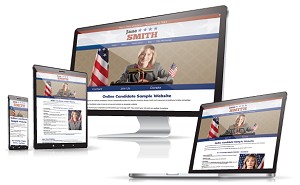

Online Candidate Home Page
  • Website Packages
    • Package Descriptions
    • Addon Options
    • Which Package Should I Choose?
  • Gallery
  • FAQs
  • Marketing Services
  • ORDER
    • Order Website Package
    • Download Store
  • Contact

Home » Campaign How-tos

How to Build a Political Campaign Website (Pages, Cost, and Examples)

How to Build a Political Campaign Website (Pages, Cost, and Examples)

Building a political campaign website isn’t complicated. But it does need to be structured correctly.

Most candidates don’t struggle because the process is difficult. They struggle because they don’t know what needs to be in place before launch.

A campaign website should not be an afterthought of your election strategy. It should be one of the first systems you put in place, alongside your messaging, outreach, and fundraising.

After working with local campaigns over time, one pattern shows up consistently: the website is often built late, adjusted mid-campaign, and expected to do too much without a clear structure. When the website is launched last, campaigns are forced to catch up while outreach is already underway.

This guide breaks down how to build a political campaign website, including:

  • the campaign website pages you need to include
  • how to choose the right setup
  • what a campaign website costs
  • how to avoid common mistakes

If you’re just starting, this will give you a clear workflow to follow. If you already have a site, it will help you identify gaps before they impact your campaign.

How Campaign Websites Actually Work

Before getting into setup, it helps to understand what a campaign website is supposed to do.

At a basic level, your website has three jobs:

  • inform voters
  • capture supporters
  • generate donations

Everything on your site should support one of these outcomes while guiding visitors toward a clear next step. Most visitors decide within 5–10 seconds whether to stay on a site. They’re looking for quick confirmation—who you are, what you stand for, and whether they should support you or continue researching other candidates.

Start by understanding the campaign website pages that drive votes and donations.

You should also review common campaign website mistakes.

Campaign Websites by Office (Why Structure Matters)

As you build your campaign website, you should know that they are not one-size-fits-all. Many local campaigns are run by small teams or volunteers, which makes a clear site structure even more important.

The core structure stays the same, but priorities shift depending on the particular office sought.

  • A city council campaign website focuses on local issues and voter contact
  • A school board campaign website emphasizes background and credibility
  • A sheriff campaign website often requires stronger fundraising and broader outreach
  • A judicial campaign website shows a candidate’s temperament and view of the law

These differences affect emphasis more than structure, but they still shape how voters interpret your site.

Plan Your Campaign Website Structure First

In many cases, the site launches quickly but is revised weeks later once gaps become clear—missing pages, unclear messaging, or no clear path to donations or volunteers. In smaller local campaigns, this often happens within the first few weeks after launch.

Fixing a live campaign website is harder than building it correctly from the start, especially once traffic from search, social media, or paid outreach has already begun.

Most campaign websites rely on a small set of core pages, but what matters is how clearly those pages are defined and connected. In most local campaigns, this typically means 5–7 core pages supporting the entire site.

Each page on your campaign website should have a clear role and function as part of a broader user experience (UX) that moves visitors toward action.

  • your homepage should direct visitors where to go next
  • your about page should establish credibility quickly
  • your donation page should remove friction

Tip: In many cases, donation forms ask for more information than needed, which slows down the process and reduces completion rates.

Campaign Website Pages and What They Should Do

Each page on your campaign website should have a clear role. If a page exists but doesn’t guide visitors toward action, it won’t contribute much to your campaign.

Page Primary Purpose What Visitors Expect Common Mistake
Homepage Guide visitors to key actions Clear message and next steps No clear call to action
About Build credibility quickly Who you are and why you’re running Too long or unfocused
Issues Explain priorities Clear, simple positions Overly detailed policy language
Donate Convert support into funding Fast, simple donation process Too many fields or steps
Volunteer Capture active supporters Easy way to get involved No clear follow-up process
Email Signup Build supporter list Quick and simple form Hidden or too complicated
Contact Provide direct communication Easy way to reach campaign Limited or unclear options

For a deeper breakdown of how to structure each page, see more about campaign website pages that drive votes and donations.

What Your Website Needs to Do to be Successful

A campaign website isn’t just a collection of pages. It’s a structured path that influences how voters engage, evaluate, and decide whether to support your campaign.

Most visitors will:

  • land on your homepage
  • scan quickly
  • decide whether to stay or leave

This decision often happens within seconds. If the site doesn’t clearly communicate, visitors leave without exploring further. Across many campaign websites, the most common failure point is not design—it’s unclear structure and missing calls to action. When we build campaign sites, we make sure that we include calls to action on every major page.

Those calls to action are important. Visitors should be guided toward:

  • learning more
  • signing up
  • donating
  • volunteering to help

On many campaign websites, this path is unclear. Pages exist, but they don’t direct visitors toward a specific action.

Plan the Visitor Flow

One of the most common patterns is rebuilding after launch.

This usually happens when:

  • key pages were skipped
  • messaging wasn’t clear
  • structure wasn’t defined early

Once outreach begins, changes become more difficult and can disrupt user flow, links, or donation paths.

If you want to see where campaigns typically run into trouble, check out these common campaign website mistakes.

Build Once, Then Improve

Your goal isn’t to be perfect on the first pass. You want a site that is clear, functional, and easy for voters to understand.

A simple, structured site will outperform a more complex one that is constantly being revised.

Once the structure is in place, you can improve messaging and content without rebuilding the foundation.

Choose How You’ll Build Your Campaign Website

Once your structure is defined, the next decision is how you’ll build your site.

Most candidates take one of two paths:

  • build it themselves using general tools
  • use a platform designed specifically for campaigns

Both can work. The difference is how much time, effort, and risk you take on during your campaign.

Option 1: Build It Yourself

Using platforms like WordPress, Squarespace, or Wix gives you flexibility, but it also puts everything on you.

That includes:

  • setting up structure
  • designing pages
  • managing updates
  • handling technical issues

For candidates with web experience, this may be manageable. For most campaigns, a buildout becomes a distraction. Some candidates spend hours and days learning how to build their own sites, and adjusting layouts or fixing small issues. Time spent learning tools, adjusting layouts, or fixing issues is time taken away from outreach, fundraising, and voter contact.

Option 2: Use a Campaign Website Platform

Campaign-specific platforms are built around how campaigns actually operate, often integrating with tools like ActBlue or WinRed for donations and supporter management.

Instead of starting from scratch, you begin with:

  • pre-built page structures
  • donation and volunteer functionality already in place
  • layouts designed for campaign messaging

This allows campaigns to launch faster with a working structure already in place.

Campaign timelines are short. Delays in getting your website live limit how much it can contribute to your campaign.

Platforms like Online Candidate follow this website approach, giving political campaigns a structured starting point that can be refined over time.

Time vs Cost vs Effectiveness

When choosing how to build your website, you’re balancing:

  • time you can realistically commit
  • budget
  • how effective the site needs to be

Lower-cost options typically require more time and carry a higher risk of delays or weaker performance. Structured solutions reduce that risk but require an upfront decision.

If you’re comparing options, review campaign website cost and pricing. You can also explore different campaign website builder options.

Choose Based on Your Campaign Reality

For candidates who want a structured starting point without managing the technical setup, platforms like Online Candidate are designed to reduce that overhead and allow campaigns to focus on outreach.

Every campaign has constraints. Some candidates have:

  • limited time
  • limited technical experience
  • short timelines

The right choice is the one that allows you to launch early, stay focused on your campaign, and avoid rebuilding later.

In most local campaigns, the limiting factor isn’t the tool—it’s time. Most candidates are balancing website setup alongside outreach, events, and fundraising, which makes speed and simplicity more important than flexibility.

Don’t Let the Website Slow the Campaign Down

If building or managing your site takes time away from fundraising, outreach, voter communication, or optimizing campaign performance, then it’s working against you.

Your goal is to launch a functional, structured site early. Launch it, and then improve it over time—not delay launch trying to get everything perfect.

Choose and Secure Your Domain Name Early

Your domain name is how voters find you online. It appears on your campaign materials, social media, and in search results, so it needs to be simple and easy to remember.

In most campaigns, the best domain is your name or a clear variation of it. Examples:

  • janesmith.com
  • votejanesmith.com
  • electjanesmith.com

Avoid long or complicated names, unusual spellings, or anything difficult to recall. If someone hears your name once, they should be able to find your site without guessing. (We once had a client who had registered a 57-character domain name. Way too long!) Short, name-based domains consistently perform better in local campaigns because they are easier to remember and repeat.

Make Sure You Control Your Domain

Domain ownership is often overlooked, but it can create problems later.

Some campaigns:

    • register domains through third parties
    • lose access after the election
  • don’t know who controls the domain

In some cases, a volunteer or third party registers the domain without clear ownership, which can make renewal or transfer difficult later.

If you’re unsure of the status, review whether your campaign website domain is really yours.

Keep It Consistent

Your domain should match how your name appears across your campaign. Inconsistent naming can confuse voters and reduce traffic.

Changing your domain mid-campaign can create unnecessary friction, including broken links and lost visibility.

Keep the Process Simple

For most candidates, domain setup is straightforward.

If you’re using a campaign website platform, this is often handled as part of the setup. For example, Online Candidate includes a .com domain with each website package, with other extensions available as needed.

The goal is to secure a clear, consistent domain early so you can move forward.

For a deeper breakdown, review why domain names matter in campaigns.

Build Your Core Campaign Website Pages Around Clear Roles

Once your domain and platform are set, the next step is building your core pages.

Most campaign websites rely on a small set of core pages. What matters is how clearly those pages are defined and how well they guide visitors toward action.

If pages exist but don’t lead to a next step, they won’t contribute much to your campaign.

Focus on getting the core structure in place first, then refine and expand your content over time with additional issue information, press release and media material.

For a deeper breakdown of how to structure each page, review campaign website pages that drive votes and donations.

Content Is Where Campaign Websites Succeed or Fail

Once your pages are in place, the next step is content.

This is where many campaign websites struggle—not because there isn’t enough content, but because it isn’t clear or easy to understand.

Most visitors will not read your site in detail. They’re skimming and scanning quickly, often on mobile devices, to answer a few key questions:

  • Who are you?
  • What are you running for?
  • What do you stand for?
  • Can I trust you?
  • What should I do next?

Your content needs to answer these clearly and quickly.

Clarity Matters More Than Volume

A common mistake is over-explaining. Pages that are long, dense, and difficult to scan don’t perform well.

More information doesn’t build credibility if it makes your message harder to understand.

Clear, focused content performs better because voters can quickly grasp your message and decide what to do next. For example, a short issues section that clearly outlines priorities will often perform better than a longer page filled with detailed policy language that is harder to scan.

Structure Content for Scanning

Most visitors will scan rather than read. This is especially true for voters visiting from mobile devices, where long blocks of text are more difficult to navigate.

Use short paragraphs, clear headings, and simple language to make content easy to navigate.

Avoid:

  • large blocks of text
  • overly formal phrasing
  • unnecessary detail

A page that’s easy to scan is far more likely to keep visitors engaged. We’ve had clients build content pages that were many screens deep, with the expectation that more detail will persuade voters—but most visitors won’t read in depth, they just don’t. This pattern shows up frequently in political candidates sites where longer content reduces engagement instead of improving it.

Connect Content to Action

Content should lead somewhere. Each page should guide visitors toward:

  • signing up
  • volunteering
  • donating

If content and every page doesn’t lead to some action, it loses impact.

For a deeper breakdown, review writing content for a campaign website.

donations from online sources

Donations and Email are Core to Your Website

Your campaign website should be functional, with the ability to attract volunteers and donors through several ways.

If fundraising and email systems aren’t in place, your website won’t generate support—it will only receive traffic.

At a minimum, your site should allow you to collect donations and capture supporter information.

Campaigns often generate early interest but miss opportunities because these systems aren’t ready.

Set Up Your Donation Page Early

Your donation page should be simple and easy to use.

It should:

  • load quickly
  • ask for only necessary information
  • make the next step obvious

Small issues, like too many form fields or slow load times, can reduce conversions. Even small increases in required fields can reduce completion rates and lead to abandoned donations.

Ask only for information required by law to keep the process fast and complete.

If you’re not sure how to set up a donation platform on your site, review how to set up campaign donations. 

You can also explore broader fundraising strategies for raising political donations online.

Build Your Email List From Day One

Your email list gives you direct access to supporters.

Unlike social platforms, where visibility is limited, email allows you to:

  • communicate consistently
  • promote events
  • request donations

Without email capture, most visitors will leave and not return. For many campaigns, this is one of the most common missed opportunities during early traffic spikes.

Make Signup Easy and Visible

Email signup should be easy to find.

Add it:

  • on your homepage
  • within key pages
  • in your footer

Keep your form simple and ask for as little information as possible. The more you ask, the more friction it presents, and the fewer people that will sign up. The goal is to capture interest quickly.

Donations and Email Work Together

These systems reinforce each other.

  • email drives repeat engagement and donation requests
  • donations build momentum and validate support

Campaigns that set both up early are better positioned to grow support over time.

Be Ready When Interest Builds

Interest in a campaign doesn’t always build gradually.

It can spike:

  • after an announcement
  • after media coverage
  • during key moments in the race

Your website needs to be ready when that happens.

If donation or signup systems aren’t in place, those opportunities are lost.

Most Campaign Website Problems Are Preventable

Across local campaigns, the same issues come up repeatedly. They are rarely technical—they come from starting too late, unclear structure, or incomplete setup. These issues tend to compound over time, reducing engagement rather than causing a single point of failure.

Common issues include:

  • launching the website too late
  • missing key pages or incomplete content
  • unclear calls to action
  • donation or signup forms that don’t work properly
  • content that is difficult to scan

These problems often aren’t obvious until traffic reaches the site and visitors fail to take action.

Most campaigns don’t fail because of one major issue, but because of small problems that reduce engagement over time.

Launch Your Campaign Website Early

When your website goes live affects how useful it will be.

Your site should be in place before you announce your campaign, direct voters online, or begin outreach. Early interest—especially after announcements or local coverage—is often the highest-intent traffic a campaign will receive. This is where outside promotion on social media, press releases, and news articles becomes important.

Your website doesn’t need to be perfect before launch. It needs to be:

  • clear
  • complete
  • functional

That means:

  • core pages are in place
  • donation and email systems are working
  • messaging is easy to understand

Delays usually come from overthinking setup, revising content too much, or treating the website as a secondary task.

A live website gives you something to build on, allowing you to refine messaging and improve performance without missing early opportunities.

Campaign Websites Vary by Office

The core structure of a campaign website stays consistent, but what you emphasize changes based on the office.

Voters are looking for different things depending on the race, and their expectations influence how they evaluate candidates online.

  • local issues vs broader priorities
  • personal background vs professional experience
  • community visibility vs fundraising

We’ve seen the same structure perform differently depending on how it’s adapted to the office. Campaigns that align structure and messaging to the expectations of the specific office tend to perform more consistently.

City Council Campaign Websites

City council campaigns are highly local. Your website should focus on:

  • local issues and priorities
  • visibility in the community
  • clear ways for voters to connect with you

These campaigns often rely on:

  • name recognition
  • local outreach
  • early supporter engagement

See examples of city council campaign websites.

School Board Campaign Websites

School board campaigns are often credibility-driven. Your website should emphasize:

  • background and qualifications
  • community involvement
  • clear, understandable positions on the district and education

Voters want to quickly understand who you are and what you stand for.

Learn more about websites for school board candidates.

Sheriff and County Campaign Websites

County-level campaigns require broader reach. Your website should support:

  • stronger fundraising efforts
  • wider audience communication about your positions on the law and enforcement
  • clear messaging across different voter groups

Sheriff campaigns often depend more on donations and visibility across larger areas, like entire counties.

Learn more abut websites for sheriff candidates.

The structure outlined here reflects how many local campaigns operate in practice, particularly those with limited time and resources. Starting with a clear foundation allows you to focus on outreach while your website supports your efforts.


Read More:

  • political campaign website mistakes
    Campaign Website Mistakes That Cost You Votes (and…
  • oc-screenshots
    Why Starting Your Campaign Website Early Makes Sense
  • What to add to political campaign website
    Campaign Website Pages: What Every Candidate Needs…
« Why Every Local Candidate Should Have a Campaign Manager
The Power of Branding Your Political Campaign »


Build Your Campaign Website

Political campaign websites on screens
Online Candidate makes it easy to launch your political website and build your online presence.

View Website Packages


Free Political Campaign Guide

Free Campaign Guide
For candidates launching online.
★ Setup before you announce
★ Campaign website pages
★ Launch checklists

No spam. Campaign-focused updates only.

Recent Posts

  • Campaign Website Pages: What Every Candidate Needs to Include
  • Why Fundraising Is the Hardest Part of Running for Office
  • Why Starting Your Campaign Website Early Makes Sense
Popular Posts
  • Preparing to Run for Office
  • Opening a Bank Account For Your Political Campaign
  • Campaign Slogan Ideas
  • Writing Your Political Candidate Bio
  • Requirements to Run for Office
  • Sample Campaign Fundraising Letter
Campaign Tools & Templates
  • ★ Political Campaign Ebooks
  • ★ Political Brochure Templates
  • ★ Political Logo Templates
  • ★ Combo Savings
Political Campaigning tips and guides

Services

  • Political Websites
  • Marketing Services
  • Download Store

Our Company

  • About Us
  • Political Resources
  • For Political Pros

Contact

  • Contact Page
  • Phone: 845-926-3400

© 2004-2026
Daley Professional Web Solutions
Terms of Use | Privacy

  • Follow
  • Follow
  • Follow
  • Follow