In local elections, details matter. They can be:
A past vote.
A statement at a town meeting.
An old Facebook post that resurfaces a few weeks before Election Day.
Opposition research today happens online. Even in city council, school board, and county races, digital research can shape your strategy, sharpen your messaging, and help prevent last-minute surprises.
If you don’t understand who you’re running against, you’re reacting instead of leading.
This guide outlines how to conduct ethical, effective digital opposition research — and how to use what you learn to strengthen your campaign.
Get Your Campaign Website in Place Early
Once your campaign gets underway, there will always be something more urgent to do. Setting up your website early gives you a place to introduce yourself, explain your positions, collect supporters, and accept donations when you are ready.
Online Candidate can build and set up your campaign website for you, or you can create your own with our Monthly Campaign Website Builder starting at $29/month.

What Is Political Opposition Research?
Opposition research is the process of gathering publicly available information about your opponent to better understand:
- Political background: Learn and understand your opponent’s political history. What offices have they held, what primary and general election difficulties did they face, and so on.
- Voting history: Analyzing how they’ve voted on key issues. Have they changed positions, and why? This is a key to effective opponent policy analysis.
- Public statements: Tracking speeches, interviews, and public communications.
- Campaign strategies: Studying their past and current approaches to campaigning. Did they focus on specific advertising or voter type?
- Personal background: Looking into their educational and professional history, where relevant to their political stance.
- Campaign messaging.
- Endorsements and alliances.
For local candidates, this often means reviewing:
- City council or school board minutes
- Planning commission votes
- Local newspaper archives
- Public Facebook posts
- Past campaign websites
For example:
- Did a council member vote against a zoning change and now campaign on economic growth?
- Did a school board candidate criticize curriculum policy three years ago but soften that position now?
- Did an incumbent miss key budget votes?
The goal is to build a comprehensive picture of your opponents, both professionally and, where relevant, personally. Or to quote Sun Tsu: “If you know the enemy and know yourself, you need not fear the result of a hundred battles.”
Why Opposition Research Matters in Local Elections
Local races are often decided by small margins and low-information voters.
Effective research helps you:
- Inform Strategy: Understand where your opponent is strongest — and where they are exposed.
- Refine Your Message: If they emphasize taxes, do you need to contrast? If they focus on development, do you frame it differently?
- Prepare for Forums and Debates: When a candidate says, “I’ve always supported small businesses,” you should already know whether that’s accurate.
- Prevent Surprises: Campaign season moves quickly. Posts get deleted. Messaging shifts. Narratives tighten.
Monitoring early reduces risk later. And opposition research is ongoing. It doesn’t stop after filing paperwork.
| Aspect | Purpose | Tools/Methods | Considerations |
|---|---|---|---|
| Background Research | Understanding the opponent’s political and personal history | Search engines, social media platforms, news archives | Respect for privacy, accuracy |
| Voting Records and Public Statements | Analyzing political positions and public communications | Political databases, news archives | Fact-checking, legal compliance |
| Campaign Analysis | Studying campaign strategies and materials | Campaign websites, social media, public records | Ethical campaigning, message consistency |
| Legal and Ethical Standards | Ensuring research adheres to legal and ethical guidelines | Legal advisories, ethical guidelines | Compliance with election laws, positive messaging |
| Strategy Development | Turning data into actionable insights for the campaign | Sentiment analysis tools, network analysis | Adaptability, targeted messaging |
| Archiving | Preserving research data for future reference | Screenshot tools, document scanning apps, video recording | Organized storage, regular updates |
Phase 1: Your First Pass – Search Engines
Search engines are still your first stop.
Begin broadly:
- “[Opponent Name] + budget vote”
- “[Opponent Name] + zoning”
- “[Opponent Name] + interview”
- “[Opponent Name] + school policy”
Then narrow your focus based on the issues driving your race.
Practical Tips:
- Use quotation marks for exact phrases.
- Search older date ranges to isolate prior election cycles.
- Check image and video results separately.
- Look beyond page one.
You may find an old letter to the editor. a committee report, or recorded public comments. Those details matter in close races.
Tip: Do searches on AI platforms, like ChatGPT.
Leveraging Social Media Platforms
Phase 2: Review Social Media Carefully
Social media often reveals tone and consistency more than formal speeches.
Review:
- Posting frequency
- Issue emphasis
- Changes in messaging over time
- Engagement patterns
Look deeper than current campaign posts.
For instance:
- Did they previously criticize a policy they now support?
- Are they deleting old comments or limiting replies?
- Did their tone shift after filing to run?
Set alerts for new posts, and check weekly at minimum, increasing as the campaign season continues. Campaign narratives evolve quickly.

Phase 3: Examine Public Records and Local Sources
Local campaigns rely heavily on public documentation. You’ll want to review:
- Board and council meeting minutes
- Recorded votes
- Committee reports
- Local newspaper coverage
- Campaign finance disclosures
If a candidate claims fiscal discipline, verify it against budget votes. If they promise transparency, review their public meeting participation.
Facts build contrast without hostility. Always cross-check your sources before using them publicly.
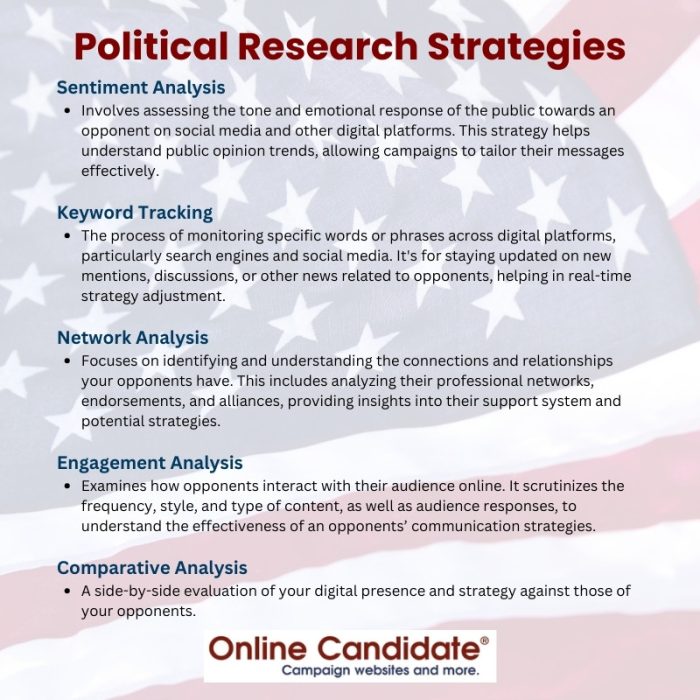
Phase 4: Analyze Their Digital Campaign Presence
Your opponent’s website is a strategic document. Take notice of:
- Which issues are emphasized
- How clearly positions are explained
- Whether they avoid specifics
- Donation and volunteer calls to action
Compare their site to yours.
- Is their messaging clearer?
- Are they addressing voter concerns you haven’t covered yet?
- Are they framing issues in a way that could dominate the narrative?
Your website is where you control the narrative. Opposition research helps you strengthen it.
Use what you learn to:
- Add issue comparison sections
- Clarify distinctions respectfully
- Prepare FAQ rebuttals
- Reinforce your credibility
Defensive Research: Audit Yourself First
Assume your opponent is doing the same research on you.
Before your campaign accelerates:
- Search your own name thoroughly.
- Review past public posts and comments.
- Identify inconsistencies.
- Archive your own messaging.
If something could be taken out of context, prepare an explanation now — not in the final two weeks. Prepared candidates stay steady under pressure.
The Importance of Archiving
Digital content changes. Screenshots don’t.
Make sure you save:
- Screenshots with visible URLs and timestamps
- Archived web pages
- Meeting minutes
- Public statements
Organize your files by issue and date. Back them up.
If a post disappears during campaign season, your archive preserves the record.
Ethical and Legal Considerations
Campaigns are competitive. They should not be reckless.
Follow these principles:
- Respect Privacy: Always respect the privacy of your opponents and their families. Don’t go into personal matters that don’t have public significance.
- Fact-Checking: Ensure that all information used in your campaign is accurate and fact-checked. Misinformation can backfire and damage your credibility.
- Legal Compliance: Be aware of and comply with all election laws and regulations. This includes rules about campaign advertising, fundraising, and voter engagement.
- Positive Campaigning: Focus on positive messaging. While it’s important to highlight differences between you and your opponents, avoid negative campaigning tactics that can be divisive.
- Verify facts before sharing.
- Avoid exaggeration.
Always respect state and local privacy laws and ethical boundaries. Credibility wins long-term. Overreach backfires.
Analyzing Campaign Websites and Materials
Your opponent’s campaign materials can reveal their strategy and priorities.
- Official Website: Check their website for detailed policy platforms, press releases, and biographies. Analyze how they present their achievements and plans.
- Campaign Brochures and Flyers: These materials often contain the key messages and promises being made to voters. They can reveal the primary focus areas of your opponent’s campaign.
Effective Analysis of Campaign Materials:
- Follow social media accounts and look for inconsistencies in messages across different platforms.
- Compare their past and present campaign materials for shifts in stance or focus. This can be especially revealing in political campaigns, where shifts might align with public opinion trends or responses to opponents’ moves.
By combining data from diverse sources, you get a more comprehensive view of their political and public personas.
Opposition Research Is About Preparedness
Local elections can turn on:
- A single vote
- A past statement
- A perceived inconsistency
Digital opposition research allows you to anticipate, not react.
- Know your opponent.
- Know your own record.
- Strengthen your website.
- Control your narrative.
Because during the campaign season, the candidate who prepares early usually sets the tone.
Get to know your political opponents and learn as much as you can about them, because you can be sure that they will be researching you!
Read More:



Should You Run for Local Office? Key Questions to Consider »