Running for local office doesn’t begin with paperwork and an announcement.
It actually begins with deciding whether you’re ready for what comes with it.
Local political races are often described as small or community-based. Sometimes they are. Other times, they’re very competitive, highly personal, time-draining, and a lot tougher than most first-time candidates expect.
Once you file to start your candidacy, you’re public. That means:
- Your financial activity may be disclosed.
- Old social media posts can resurface.
- You’ll be talked about by people you don’t know.
- Your evenings and weekends fill quickly.
- Deadlines don’t move because you’re new.
The cost of campaigning is something many do not expect. Not just money — though even local races require more fundraising than most assume — but time, energy, and scrutiny.
Get Your Campaign Website in Place Early
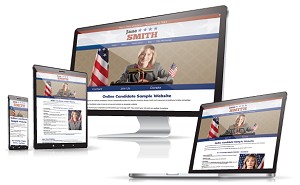
Once your campaign gets underway, there will always be something more urgent to do. Setting up your website early gives you a place to introduce yourself, explain your positions, collect supporters, and accept donations when you are ready.
Online Candidate can build and set up your campaign website for you, or you can create your own with our Monthly Campaign Website Builder starting at $29/month.
It’s more than yard signs and a website.
- It’s collecting signatures correctly.
- Tracking donations.
- Filing reports on time.
- Answering hard questions from voters who may disagree with you.
Some people are prepared for that. Some aren’t — at least not yet.
Before you choose an office, before you announce, and before you accept your first donation, you need to answer a more important question:
Is running realistic for you right now?
This page won’t show you how to win. It will help you decide whether you should run — and what level of office fits your situation. Filing requirements, signature thresholds, and reporting rules vary significantly by state and sometimes by municipality. Before committing to a race, review the specific requirements in your jurisdiction.
What First-Time Candidates Underestimate About Running for Local Office
Most first-time candidates don’t lose because they don’t care enough.
They struggle because they underestimate how structured a campaign actually is.
From the outside, a local race can look simple. A few signs. Some events. A Facebook page.
Behind the scenes, it’s filing deadlines, signature rules, and compliance reports. Lots of compliance reports.
The Administrative and Filing Requirements
There’s paperwork — a lot more than most assume.
You’ll deal with filing forms, petition requirements, reporting deadlines, and rules specific to your state or municipality. Some are straightforward. Some are technical.
- Signature pages can be thrown out.
- Reports can be rejected.
- Deadlines are firm.
Many filing and reporting deadlines are strict, and missing one can create serious problems. The exact rules, correction periods and remedies vary by jurisdiction.
If you’re organized, it’s manageable. If you’re not, the process becomes stressful quickly. Requirements, timelines, and campaign finance thresholds can differ dramatically even between neighboring municipalities.
Many first-time candidates assume they’ll “sort it out later.” Later tends to arrive faster than expected.
Fundraising Expectations in Local Elections
Even in small communities, campaigns cost money.
It may not be a large amount compared to state or federal races, but there are real expenses: a website, printed materials, digital outreach, filing costs, and basic campaign tools.
More importantly, fundraising takes time.
You have to ask people for support. Some will say yes. Some won’t.
If the idea of calling acquaintances or asking local contacts for donations makes you uncomfortable, that’s something to consider before you file.
Public Scrutiny and Opposition Research
Some local races stay civil. Many do.
Some don’t.
In competitive districts, opponents research each other. Old posts resurface. Local forums light up. People you’ve known for years may disagree with you publicly.
It’s not constant chaos. But it is visible.
If you’ve never been on the receiving end of public criticism, you’ll need a thicker skin than you might expect.
How Much Time Does a Local Campaign Actually Require?
Time is usually the biggest surprise.
A local campaign isn’t a hobby. It’s closer to a part-time job layered on top of your existing life.
- There’s pre-filing research.
- Petition circulation, if required.
- Fundraising conversations.
- Community events.
- Door knocking or direct outreach.
- Ongoing compliance reporting.
A local campaign can consume multiple evenings and weekends each week, with the workload often increasing around petitioning, fundraising deadlines and Election Day. In competitive areas, it can be more. Even smaller races have busy stretches — especially closer to the election.
If your schedule is already full, that doesn’t mean you can’t run. It does mean you need a realistic plan.
Choosing the Right Local Office to Run For
Once you’ve decided running is realistic, the next question is where.
Not all local offices operate the same way. The workload, visibility, and political temperature vary by position. Choosing something that doesn’t match your capacity is one of the fastest ways to burn out.
Here’s a clearer look at common entry points for first-time candidates.
Running for City or Town Council
City council members typically vote on budgets, zoning decisions, contracts, and local ordinances. In many communities, they are the first stop for resident complaints and neighborhood issues.
Campaigns vary by population. In small towns, you may be able to win through direct outreach and personal relationships. In larger cities, fundraising and broader voter contact matter more.
In a town of 8,000 residents, a city council race may only require a few thousand dollars. In a city of 100,000, that number changes quickly. Campaign costs can vary dramatically even among communities of similar size. Reviewing campaign-finance reports from recent races for the same office is a better starting point than relying on a national or statewide average.
Council races tend to require steady voter engagement. You need to be visible, and you’ll be expected to speak publicly. And once elected, the work doesn’t slow down much. Figure on a serious time commitment while in office.
For first-time candidates, this can be a realistic starting point — but only if you’re prepared for steady voter contact, ongoing public scrutiny, and a large time commitment.
Running for School Board
School board members oversee district budgets, curriculum direction, superintendent contracts, and policy decisions that affect families directly.
These races are often nonpartisan, but they are rarely neutral. Education debates can become personal quickly. Meetings are public. Decisions are closely watched.
Fundraising expectations are usually lower than city council in similar-sized communities. However, turnout can be unpredictable, and small shifts in engagement can decide the race.
If you have direct involvement with schools — as a parent, volunteer, or community advocate — that experience matters. Without it, the learning curve can be steep.
Special District Boards
This includes water authorities, utility boards, park districts, and similar governing bodies.
Responsibilities on boards tend to be narrower — infrastructure, service delivery, or regulatory oversight. These campaigns often receive less attention and may require fewer resources. In some cases, there may not even be opposition.
Special district races may have their own filing, qualification and reporting requirements. Verify the rules for the specific office before assuming they work like other local elections.
For someone new to campaigning, these races can offer a contained way to gain experience in public office.
Running for County-Level Offices
County positions, like for legislative bodies, or county sheriff, typically cover larger geographic areas and more voters.
Depending on the role, responsibilities may include overseeing departments, managing budgets, running courts, or administering records. The scale is broader, and the campaign must reflect that.
Reaching voters across a county requires coordination of both volunteers and media. Fundraising thresholds rise. Name recognition becomes more important.
For a first-time candidate without an existing base or network, county-level races demand more structure from day one. They are achievable. They just require realistic planning.
How to Compare Local Offices Before You Decide
When weighing your options, focus on three variables: scale, exposure, and support.
Scale means how many voters you’ll need to reach and how large the geographic area is. Exposure refers to how visible and controversial the issues tend to be. Support is whether you already have relationships, credibility, or community ties connected to that office that can help you win.
If the scale feels overwhelming, the exposure feels misaligned with your temperament, or you lack any natural support base, that’s a signal. Remember, the goal isn’t to choose the biggest role available. It’s to choose the one you can realistically compete in.
Local Office Candidate Self-Assessment Checklist
Before you move forward, answer these honestly:
- I meet the age, residency, and registration requirements for the office I’m considering.
- I understand the filing deadlines and what paperwork is required.
- I can commit at least 10–15 hours per week during active campaign periods.
- I am willing to ask for financial support — even from people I know personally.
- I can raise enough funds to cover basic campaign costs in my community.
- I am prepared for public criticism and scrutiny.
- I have at least a small group of reliable supporters who will help.
- My work and family situation can absorb the added pressure for several months.
If several of these give you pause, that doesn’t mean you shouldn’t run. But it does mean you should slow down and plan more carefully before filing.
Want a more detailed evaluation? Take our Candidate Readiness Self-Assessment.
Final Thought Before You Decide
Running for local office is demanding, but it’s also one of the most direct ways to shape your community.
Plenty of first-time candidates have stepped forward without prior political experience and built credible, disciplined campaigns. The difference wasn’t luck. It was preparation.
If you’ve read this far, you’re already thinking more carefully than most potential candidates.
We’ve seen that it’s worth taking the time to match the right office to your situation. Be realistic about your capacity. Build support before you file. Too many candidates think they can run for higher office based on grit and gut instincts on messaging. That doesn’t work.
When you move forward with clear expectations, the process becomes manageable — even if it’s still a tough road.
If you’re serious about running, make the decision deliberately. Then build your campaign from there.
Read More:



Can You Run for Local Office With a Full-Time Job? »
Tags: city council, local campaigns, local politics, school board, seed money