Most local political candidates assume the hardest part will be fundraising, messaging, or voter outreach. In practice, most local political campaigns struggle much earlier—when candidates build systems that don’t match the scale of a small local campaign.
Running for school board, town council, city council, judge, clerk, or another local office is not the same as running a state or federal race. The timelines are shorter. Staffing is minimal. Most candidates are running for local office while managing full-time jobs, families, and existing obligations.
In that environment, trying to run a small campaign like a large one can bog you down.
Where Local Political Campaigns Go Off Track
Most local election campaigns don’t stall because candidates lack effort. They stall because the campaign structure requires more time and attention than a time-constrained candidate can realistically give.
This often shows up in familiar ways:
Get Your Campaign Website in Place Early
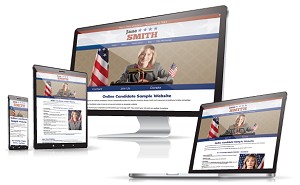
Once your campaign gets underway, there will always be something more urgent to do. Setting up your website early gives you a place to introduce yourself, explain your positions, collect supporters, and accept donations when you are ready.
Online Candidate can build and set up your campaign website for you, or you can create your own with our Monthly Campaign Website Builder starting at $29/month.
- A candidate website that keeps getting revised and launches late
- Well-intentioned campaign tools that never get fully adopted
- Messaging that shifts depending on who last updated it
- Volunteers unsure what to share or where to send people
For first-time political candidates learning how to run a local political campaign, it’s not a problem of motivation. It’s an organization problem.
How Local Voters Engage With Campaigns
Most local voters encounter campaigns casually. They’ll see a lawn signs on the way to work. A name mentioned at a school meeting. A post shared in a neighborhood group.
When they look up a candidate by name, they’re doing a quick credibility check, usually on a phone. They want to know:
- Is this person actually running?
- Do they understand the office they’re seeking?
- Can I grasp their priorities quickly?
- Does this local campaign feel legitimate?
Clear, simple campaign messaging answers those questions fast. Incomplete or cluttered information introduce doubt and reduce campaign visibility, even if the candidate is qualified.
Why Simplicity Signals Seriousness in Local Races
In a local political campaign, legitimacy matters more than polish. Party committees, community leaders, and local media all look for basic signals of preparation.
A straightforward presence suggests the candidate understands the role and respects the election process. That matters whether it’s a school board campaign, a city council campaign, or a judicial campaign.
Overbuilt campaigns often feel unsettled. Too many pages. Too much language. Too many ideas competing for attention. Focused campaigns tend to project more candidate credibility.
What You Actually Need to Run Your Campaign
Despite what many candidates are told, effective local campaign strategy starts with a short list of essentials.
At a minimum, a campaign needs:
- An explanation of who the candidate is and why they’re running for office
- Contact information for voters, media, and community stakeholders
- A simple way for supporters to stay informed or get involved
- Messaging that remains consistent across the local election campaign
When these basics are in place, the campaign feels real. When one is missing, the effort feels unfinished, regardless of budget.
Early Visibility Matters in Local Campaign Planning
Campaign planning for local races often underestimates how quickly things move. Filing deadlines pass quietly. Early voting begins with little fanfare. Endorsements are decided before many voters are paying attention. Candidates who establish an early presence gain name recognition while others are still preparing.
Simple campaign infrastructure supports early visibility. A website and email list allows candidates to launch sooner, adjust messaging easily, and focus on outreach instead of constant maintenance. In a limited campaign budget environment, speed and clarity matter more than perfection.
Designing Campaign Operations That Fit Real Life
Most people running for local office are part-time candidates. They manage campaign operations late at night or on weekends. They rely on a small group of volunteers. And beginning with a simple structure makes growth manageable.
Once the foundation is stable, campaigns can add:
- More pages as issues become clearer
- Additional outreach as volunteers join
- More structure as fundraising or endorsements increase
Because the campaign basics are solid, expansion feels controlled rather than chaotic.
If You’re Just Starting, Here’s What to Prioritize in the First 30 Days
If you’re at the beginning of a local campaign, the first month sets the tone for everything that follows. The goal during this period isn’t to build a perfect operation. It’s to establish credibility and momentum without creating systems you can’t maintain.
Start by getting something public and functional in place. That means a basic campaign presence that explains who you are, what office you’re running for, and why you’re running. It doesn’t need to be exhaustive. It does need to be clear and live.
Next, settle on a small set of core messages and commit to them. Decide how you describe yourself, the office, and your priorities, then use that language consistently. Avoid the temptation to keep revising your message every time you talk to a new audience.
Make it easy for people to reach you and support you. One reliable contact method (like a website!) and one clear way for supporters to stay informed is enough at this stage. Complexity can come later, if it’s needed at all.
Finally, focus on visibility over refinement. Let people see that you’re running. Share updates, talk to voters, and show up in the community. A campaign that’s visible early has more room to grow than one that launches late but polished.
If you can do these things in your first 30 days, you’ll be ahead of most local campaigns—and you’ll have built a foundation you can actually sustain.
Read More:



Tactics for Conducting Digital Political Opposition Research »
Tags: local campaigns, local politics, messaging