Most political candidates don’t decide they need a website on their own. It’s usually when someone else points it out.
A supporter asks if there’s a place to learn more. A reporter looks you up. Or you Google your own name and realize what shows up isn’t you—or isn’t helpful.
That’s usually the moment candidates start thinking seriously about their online presence. And it’s often later than it should have been.
After working with hundreds of local and state campaigns, this pattern shows up consistently—candidates react to demand for a website rather than planning for it.
Online political campaigning has changed over the years, but one thing hasn’t: the political campaign website is still the hub. It’s where donations go, where information lives, and where people check whether a campaign feels legitimate.
Get Your Campaign Website in Place Early
Once your campaign gets underway, there will always be something more urgent to do. Setting up your website early gives you a place to introduce yourself, explain your positions, collect supporters, and accept donations when you are ready.
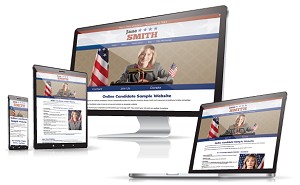
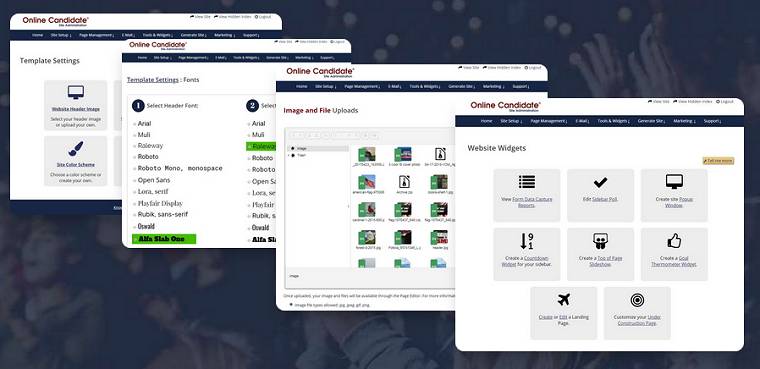
Online Candidate can build and set up your campaign website for you, or you can create your own with our Monthly Campaign Website Builder starting at $29/month.
For most down-ballot races, it’s also the only digital property the campaign fully controls.
Launching a political campaign website at the last minute often creates more stress than results.
Most campaigns should launch a website as soon as they begin organizing or raising money. This is typically 3–6 months before active campaigning. This allows time for search visibility, early donations, and establishing credibility before voters start actively researching candidates.
Starting your campaign website early reduces pressure later
 Digital campaign will enhance your credibility when used well. What many first-time candidates don’t expect is the learning curve. Choosing a political website provider is often one of the first real campaign decisions, and it’s not always obvious what matters at the start.
There are tools to set up, decisions to make, and details to sort out. Starting early gives you room to learn without rushing. More importantly, it keeps small decisions from becoming stressful ones later, when deadlines are closer and attention is pulled in multiple directions.
Most candidates who start early aren’t trying to perfect everything. They’re trying to get something solid in place so the campaign can move forward. When we get material for building a website, sometimes it doesn’t all come at once. While you want to have enough content to get the site started, a website is always a work in progress.
Regardless, campaigns that start early tend to make better structural decisions—domain ownership, donation setup, messaging—because they’re not making them under deadline pressure.
By contrast, campaigns that wait often compress weeks of decisions into a few days, which leads to rushed setup, missed details, and avoidable rework or poor messaging.
What happens if you launch too late?
- You don’t rank for your own name
- Donations are delayed
- Press has nowhere to link
- Opponents may control narrative space
Start early to raise money and donations faster
Candidates who begin campaigning early tend to have an advantage when it comes to raising political seed money. A website with online donations makes it easier for supporters to contribute.
Clicking and donating takes seconds. Writing a check, finding an envelope, and mailing takes more effort. If you want to make it easy for people to support you, online fundraising matters. Early online donations also help establish credibility, especially for first-time candidates who are just introducing themselves to voters.
Those early donations create momentum and signal that the campaign exists and that people are paying attention.
In many local campaigns, the first donations come from immediate networks—friends, colleagues, and early supporters—and those contributions typically happen within days of launching a site with a working donation system.
Without a website, that early intent often gets delayed or lost entirely.
Many candidates start with a simple website to raise initial funds and then refine or expand it later, closer to the primary or general election. That approach gives the campaign flexibility without delaying its online presence.
For example, a city council candidate who launched a city council campaign website 90 days early was able to collect initial donations within the first week and began appearing for name searches within a month.
Search engines need time to find your campaign site
Go ahead and search your name on Google. What comes up?
It might be a LinkedIn profile, a social media account, a news article, or information about someone else with the same name. That’s often when candidates realize people are already looking for them.
It usually takes weeks, sometimes longer, for a new campaign website to gain traction in search results. Google doesn’t immediately rank new or unknown sites, even if the domain includes the candidate’s name. Time matters, and so do links from other sites that point back to yours.
From a search perspective, a new campaign website starts with no authority, no inbound links, and no established connection between your name and the domain.
Google needs time to crawl the site, associate it with your name as an entity, and validate it through mentions or links from other sources.
Launching a website a few weeks before an election and hoping voters will find it is unrealistic. Waiting until the last month or two of a campaign doesn’t leave enough time to build visibility or support online. By the time the site begins to show up in search results, the window to benefit from it may already be closing.
In competitive or even moderately contested races, candidates who launch late often never fully control the search results for their own name before Election Day.
Some elected offices, such as judicial or law enforcement positions, have specific rules about when campaigning or fundraising can begin. There may be requirements as to what can appear on a campaign website for judge or a sheriff election website. Always check your local election requirements before starting any political activity.
What happens after you launch a campaign website?
- Week 1–2: Site indexed
- Week 3–6: Early name association
- Month 2–3: Search traction + donations
- Month 3+: Compounding visibility
Starting on your own site—or someone else’s?
If you research campaign website options, you’ll see many generic website providers offering instant sign-ups. These services usually mean starting from scratch: building pages, setting up forms, and configuring features on your own.
That can take more time than candidates expect, especially when the provider isn’t focused on political campaigns.
General-purpose website builders are designed for flexibility, but not necessarily speed, which means candidates often spend time figuring out structure instead of launching.
It’s also worth asking what kind of site you’re actually getting. Is it a standalone website with its own domain, or is it a subdomain or folder on someone else’s platform? Is the domain included? And if something goes wrong, who do you contact?
These questions usually come up when something breaks, or when time is already tight.
Owning your domain and having a stable, standalone site also matters for long-term control—especially if your campaign gains traction and traffic increases.
Campaign websites built for first-time candidates
Online Candidate campaign websites include built-in pages, forms, and tools created specifically for political campaigns. As a political website provider, Online Candidate focuses on giving campaigns a working foundation early.
Online Candidate has supported campaigns at multiple levels of government, with a focus on local and first-time candidates who need to launch quickly without building from scratch.
We believe in clear pricing, straightforward support, and helping candidates understand what they’re using, rather than overwhelming them with options they don’t need.
While some campaigns choose to build fully custom sites, most early-stage candidates benefit from launching quickly with a structured setup and refining it over time.

Online Candidate offers multiple website packages including a DIY website builder to help candidates launch early and look professional. Choosing the right provider early gives more time to focus on outreach, fundraising, and connecting with voters.
If you’re already thinking about your campaign, you’re not early—you’re on time. The advantage comes from acting before everyone else does.
Read More:



Why Fundraising Is the Hardest Part of Running for Office »
Tags: messaging, personal branding