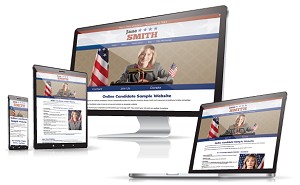
Candidates sometimes contact us because their campaign website does not show up when someone searches their name.
When this happens, one of the first things we check is simple: does the website actually mention the candidate’s full name?
It sounds obvious, but it’s a common issue. After working with political campaign websites for many years, we’ve seen plenty of sites where the candidate’s name barely appears in the body copy. The home page may say “I’m running for mayor” or “I believe our town deserves better,” but it may never say “Jane Smith for Mayor of TinyTown.”
That makes the page less clear.
Search engines need text to understand what a page is about. If the candidate’s ballot name, office, and location are missing from the copy, the campaign website may have a harder time showing up for name-based searches.
Get Your Campaign Website in Place Early
Once your campaign gets underway, there will always be something more urgent to do. Setting up your website early gives you a place to introduce yourself, explain your positions, collect supporters, and accept donations when you are ready.
Online Candidate can build and set up your campaign website for you, or you can create your own with our Monthly Campaign Website Builder starting at $29/month.
This is why point of view matters.
Technically, this is about point of view, not tense. But the practical question is simple: should your campaign website say “I,” or should it use the candidate’s name?
This applies to all types of local races, including mayor campaign websites, school board campaign websites, sheriff campaign websites, city council, county legislature, judge, town supervisor, and county clerk campaigns.
What is first-person campaign copy?
Writing in the first person means writing from the “I” point of view.
For example:
I am running for office because our community deserves better leadership. I have the experience to do the job. My background is in public service, small business, and local advocacy.
First-person copy can sound personal and direct. It works well when the candidate is speaking directly to voters.
But it has one drawback for campaign websites. It replaces the candidate’s name with “I.” If most of the website is written this way, the candidate’s full name may not appear often enough on the page.
What is third-person campaign copy?
Third-person copy uses the candidate’s name instead of “I.”
For example:
Jane Smith is running for mayor because TinyTown deserves better leadership. Smith has the experience to do the job. Her background includes public service, small business, and local advocacy.
See the difference?
The second version reinforces the candidate’s name. It also connects the candidate with the race. That helps voters understand who the site is about and gives search engines clearer information.
Which style should your campaign website use?
We recommend writing most campaign website content in the third person.
This is usually best for the home page, candidate biography, issues pages, endorsements, press releases, volunteer pages, and general campaign information. These pages should clearly identify the candidate and the office being sought.
Third-person copy also avoids repetitive “I” statements. It tends to sound more formal and more campaign-ready.
This does not mean stuffing the candidate’s name into every sentence. That will sound awkward.
Instead, use the full candidate name in important places. Then use shorter references where appropriate.
For example:
Jane Smith is running for Mayor of TinyTown to restore accountability, improve local services, and make town government more responsive to residents.
Then later:
Smith has served on the local planning board for six years.
This keeps the copy readable while still reinforcing the candidate’s identity.
For more help with campaign content, see Don’t Let Weak Copy Undercut Your Political Campaign.
.

When first person works better
First person still has a place on a campaign website.
It works well for a candidate’s personal message, open letter to voters, fundraising appeal, video script, or “Why I’m running” statement.
For example:
I’m running because I believe TinyTown needs practical leadership, better communication, and a town board that listens.
That sounds natural as a personal message.
Just make sure the candidate’s name appears around the first-person copy. A personal letter could use the heading:
A Message from Jane Smith
Or it could end with:
Vote Jane Smith for Mayor on November 3.
This keeps the personal tone while still making the page clear.
For biography-specific guidance, see Tips for Writing a Candidate Bio.
Simple ways to add the candidate’s name
If your site uses first-person copy, there are easy ways to include the candidate’s name naturally.
Use pull quotes. For example:
“Jane Smith is committed to lowering costs, improving local services, and making town government more accountable.”
Add a clear call to action at the bottom of important pages or in the footer as a catch-all call to action:
Vote Jane Smith for Mayor on November 3.
Use the candidate’s name in page titles:
Jane Smith for Mayor of TinyTown
About Jane Smith
Jane Smith’s Plan for Safer Streets
Write clear meta descriptions that include the candidate’s name and office:
Learn more about Jane Smith, candidate for Mayor of TinyTown, and her plan to improve local services, reduce waste, and restore accountability.
These small details help people and search engines understand the page faster.
For more on campaign website visibility, see Political SEO Strategies for Campaigns and Candidates.
Final recommendation
Write most political campaign website copy in the third person. Use first person where the candidate’s own voice adds value. That includes personal letters, direct appeals, quotes, and video scripts.
No matter which style you choose, make sure the candidate’s full name appears on each important page of the website. Use the name in page titles, headings, meta descriptions, and calls to action.
Your campaign website should make it easy for voters to know who you are, what you are running for, and why they should support you.
Looking for sample website copy and content?
Visit OnlineCandidateResources.com. Access is free for all Online Candidate clients. It’s designed to help give your website – and campaign – a winning edge.
Read More:


They’re Not Campaign Supporters Until You Get Them in Voting Booth »