We are often asked by our political website clients (and potential clients) what fundraising services and tools we recommend for their online campaigns. In this article, we’ll walk you through the best political donation platforms, offering a comparison of features, costs, and the pros and cons of partisan vs. non-partisan platforms.
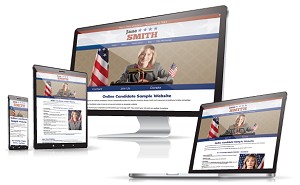
At Online Candidate, we have helped political campaigns connect their websites to donation platforms for many years. Most local campaigns do not need a complicated fundraising system. They need a reliable donation path, proper donor data collection, and a clear way to connect fundraising appeals to their campaign website.
Key Takeaways
- Political donation platforms allow users to donate online to political campaigns, candidates, and causes.
- For political campaigns, choosing a platform designed for compliance, donor tracking, and ease of fundraising is crucial.
- Candidates should consider using a donation platform specifically geared for political campaigns to simplify reporting and donor tracking.
- There are both partisan and non-partisan donation platforms, each offering different pricing structures.
- Before accepting online donations, you must first establish a dedicated political campaign bank account.
- A donation platform processes contributions. Your campaign website helps explain why someone should contribute in the first place.
- Platform features, fees, and terms can change, so always verify current pricing and policies before signing up.
What is a political donation platform?
Political donation platforms are websites that allow users to donate online to political campaigns, candidates, and causes. If you are running for office, raising money is vital to success and to help you get your message out. Digital campaigning has made it easy to collect donations online.
Although wealthy donors still contribute the majority of donations to political campaigns, small-dollar donors — those who give $200 or less — now account for a significant portion of campaign funds. In fact, small-dollar donors contributed $3.5 billion to federal candidates in 2022 source: Center for Responsive Politics.
That said, the donation platform is only one part of the fundraising system. Your campaign still needs a clear message, a professional website, and a strong reason for supporters to give.
Finding the right donor system for your needs
For political candidates, we recommend using a service that is specifically geared for political campaigns. This helps your campaign collect the right donor information and simplify reporting.
A good political donation system should make life easier for the candidate, treasurer, and donor.
Features to look for in political fundraising tools:
- A flat-rate pricing structure for easier budgeting.
- No setup fees or monthly maintenance fees, just transaction-based fees.
- Recurring donation options that allow donors to contribute on a regular basis.
- Customizable donation forms with your logo, colors, and branding to maintain consistency across your campaign materials.
- Proper donor information collection, including details like employer, occupation, and citizenship status, to ensure compliance with political fundraising laws.
- Automatic deposits to your campaign bank account.
- Analytics tools to track incoming funds, donors, and trends.
- Tools to simplify state, local, and FEC reporting for transparency and compliance.
- The ability to export donor records for your campaign treasurer.
- Clear refund policies and contribution-processing rules.
- Mobile-friendly donation pages that are easy for supporters to complete.
- Support for campaign disclaimers, contribution limits, and donor eligibility language where needed.
Donation platforms for non-profits may be able to handle some of these requirements. But to make life easier on your campaign treasurer, go with a system specifically designed for political donations and reporting.
Before choosing a platform, ask whether it collects the donor information required for your race. Also confirm how quickly funds are deposited, how refunds are handled, and whether donor records can be exported in a useful format.
Always check with your campaign treasurer, election board, or compliance professional before accepting contributions online.
Partisan vs. Non-Partisan Fundraising Platforms
Your next decision is whether to choose a partisan or non-partisan platform. The main difference here is the platform’s target audience:
- Partisan platforms focus on one political ideology (e.g., Democratic or Republican) and serve campaigns from those political parties.
- Non-partisan platforms are open to campaigns from all political affiliations.
Transaction fees typically range from 2.9%–3.9% + $0.30 per transaction, but this can vary based on the platform and the services included. Transaction fees vary by platform. Some charge a percentage of each contribution, some add a per-transaction fee, and some include monthly or service fees. Review the full pricing structure before comparing platforms on transaction fees alone.
Below are several popular online donation services used by political campaigns.
All of these services can be integrated into the Online Candidate content management system. It’s typically done through embedding a donation form or linking out to a branded donation page on the service’s website.
Donation Platforms for Non-Partisan Fundraising
- Anedot – Donation and payment system for non-profits, political campaigns, and causes. Integrates with multiple services.
- RaiseTheMoney.com – Provides campaigns and organizations with a streamlined way to accept online contributions.
- FundHero.io is a fundraising service with built-in Contact Relationship Management system. It has a flat monthly fee in addition to its transaction fees.
Non-partisan platforms are often a good fit for local races, judicial races, school board campaigns, municipal candidates, and campaigns that do not want to use a party-specific fundraising ecosystem.
Donation Platforms for Partisan Fundraising
- ActBlue.com – The leading fundraising platform for Democratic campaigns.
- WinRed.com – Fundraising platform for Republican, conservative and center-right groups.
Partisan platforms can be useful because donors may already recognize and trust them. They can also make repeat giving easier for supporters who already have accounts or payment information saved. However, they are not appropriate for every race or every candidate.
| Platform | Best For | Type | Strengths | Watchouts |
|---|---|---|---|---|
| ActBlue | Democratic campaigns | Partisan | Well-known donor platform, recurring donations, strong Democratic fundraising ecosystem. | Only suitable for eligible Democratic and progressive campaigns. Review current terms and fees. |
| WinRed | Republican campaigns | Partisan | Recognized Republican fundraising platform with campaign-focused donation tools. | Only suitable for eligible Republican, conservative, and center-right campaigns. Review current terms and fees. |
| Anedot | Political campaigns, nonprofits, and causes | Non-partisan | Flexible platform with political and nonprofit use cases, integrations, and donor data tools. | Compare current pricing, reporting options, and integrations before choosing. |
| Raise The Money | Local, state, and non-partisan campaigns | Non-partisan | Political-focused platform designed to accept online campaign contributions. | Confirm current pricing, payout timing, and reporting features. |
| FundHero | Campaigns needing fundraising plus CRM tools | Non-partisan | Includes donor-management and CRM-style features in addition to fundraising tools. | Monthly fees may be more than some small campaigns need. |
Check Terms & Refund Policies Carefully
Especially for partisan platforms, ensure you carefully review their terms of use and refund policies before making a decision.
You should also review donor tip settings, refund procedures, payout timing, data ownership, and account termination terms. These details matter if your campaign needs to reconcile donations quickly or respond to donor questions.
For state or congressional campaigns, you might need more extensive systems that combine CRM, social media tools, and email marketing features. These integrated services tend to be more expensive. However, many smaller campaigns only need a simple donation platform that integrates with their website, social media, and email.

Our Practical Recommendations
The fundraising system you’ll want to use depends on your campaign’s size, political affiliation, compliance needs, and budget.
- For most local Democratic campaigns, ActBlue is often the first platform to review.
- For most local Republican campaigns, WinRed is often the first platform to review.
- For nonpartisan campaigns, Raise The Money and Anedot are often good starting points.
- For campaigns that want fundraising tools plus donor-management features, FundHero or a broader campaign CRM may be worth comparing.
- For campaigns that only want to use PayPal, Stripe, Venmo, or another generic processor, understand that you may be creating extra compliance work for your campaign.
These recommendations are based on feedback from our clients who have successfully used these platforms. Compare your options early and choose a platform that fits your campaign’s affiliation, reporting needs, and fundraising goals.
How Online Candidate Fits Into Online Fundraising
Online Candidate does not replace your donation processor. Instead, your campaign website gives that donation link a home.
Campaigns can link to or embed third-party donation forms, add donation buttons throughout the site, connect fundraising appeals to specific pages, and give supporters a professional place to learn about the campaign before contributing.
A donation platform handles the transaction. Your campaign website helps make the case for the contribution. Most supporters do not donate in a vacuum. They want to know who you are, what you stand for, what the campaign is trying to accomplish, and whether the effort looks serious enough to support.
A strong campaign website gives your donation link context. It can connect your message, biography, issues, endorsements, volunteer opportunities, campaign updates, and donation call to action in one place.
A good campaign donation page should include:
- A short reason to contribute.
- Suggested giving amounts.
- A secure donation button or embedded form.
- Campaign branding that matches the rest of the website.
- Clear compliance language where required.
- A mobile-friendly layout.
- A thank-you or confirmation process.
- Links to other supporter actions, such as volunteering or sharing the campaign.
The easier and more persuasive the donation path is, the better your campaign can turn interest into financial support.
What do you need to start taking donations online?
To get started, you’ll need a campaign bank account in order to accept funds. You’ll also need an Employer Identification Number, or EIN. In most cases, you’ll need to provide a valid photo ID. Having these items ready will streamline the account creation process.
Review your fundraising platform options before choosing which you will use. After you sign up, your credentials will need to be verified before your donation account is activated. You’ll want to start the signup process early just in case there is a glitch in your account verification. Don’t wait until just before your first fundraiser to start the process.
You should also have your campaign committee information, treasurer details, campaign address, disclaimer language, and bank account information ready before starting the application process. Some platforms may ask for additional verification before donations can be accepted or funds can be deposited.
Related: How Online Political Donations Work
Should you use PayPal for political contributions?
While the fees are low, PayPal lacks many features that political-based donation processors have, including donor information recording, donor management, and social media integration.
While the Online Candidate system supports PayPal by first taking required donor information, it makes the donation a two-step process. While some of our clients today still want to use PayPal, we don’t recommend it.
In this article, we outline the reasons why you don’t want to use PayPal for political campaigns or PACs.
Avoid Non-Political Payment Processors
For the same reasons that we do not recommend PayPal for political donations, we also discourage the use of other business-based payment processing services like Stripe, Venmo, Braintree and WePay. The lack of proper donor data collection and ease of reporting makes it harder for campaigns to comply with political fundraising laws and regulations. If you do go with one these services, it’s likely you’ll need custom programming by a web developer to integrate proper data collection.
For example, generic payment processors may not collect employer and occupation information by default. They may not include political contribution affirmations, campaign-specific disclaimers, contribution-limit language, donor exports, or campaign-friendly reporting tools.
That means your campaign may need additional forms, custom programming, manual reconciliation, and extra treasurer review. For most local campaigns, that added complexity is not worth the small savings.

Comparing costs between generic and political-specific donation processors
Fees aren’t everything. Just because one vendor charges a higher fee than another doesn’t mean that your campaign will take in less money.
Here’s an example of a local campaign using hypothetical numbers to show how effectively using features can make one platform far more effective than a ‘cheaper’ option.
Suppose one online processor service has a 3% transaction fee. The second has a 6% transaction fee. Which service will leave your campaign with the most money? The first, of course. After all, it takes a smaller bite out of every donation.
Unfortunately, the math isn’t quite that simple…
Say the 3% service is bare bones and allows you to just add a button to your campaign website and a contribution link for your email. Let’s say you bring in $10,000 in donations. After expenses, you are left with $9,700.
Using the 6% service is twice as expensive. It leaves your campaign with $9,300 after deducting costs.
But suppose the higher-cost service has additional tools to facilitate online fundraising. Let us say that besides buttons and email links, the 6% service provides custom contribution pages, social media widgets, and online viral tools. Suppose that extra functionality helps bring in just 10% more in donations.
That extra 10% would provide an additional $1,000, for a total of $11,000. After taking away the 6% fees, you are left with $10,340. That is $1,040 or 11.2% more money in your coffers than the 3% service brought in.
If you can leverage the tools of the 6% service to bring in 20% more, then you would net $11,280 after fees. That’s $1,580, or about 16.3%, more than the lower-fee option in this example.
Keep in mind that the scenario above is just an example, and results can and will vary. Your fundraising success will not only depend on your payment processor, but also how you use your online tools, the size of your campaign, and other factors.
Online fundraising platforms come with bells and whistles for a reason. Plan to use those features to get the most from your efforts.
The real question is not simply, “Which platform has the lowest fee?” The better question is, “Which platform helps us raise more money while keeping donor records organized and compliant?”
Start your campaign website today and connect your donation platform to a site built for political campaigns. Still unsure which platform is right for you? Contact us for a recommendation based on your campaign’s needs.
Related Resources:
- What To Know Before You Accept Political Donations Online
- How Candidates Raise Money For Local Campaigns
- Raising Seed Money For Your Political Campaign
Free Download: Download the free Online Fundraising Guide
Read More:

Tags: political donations