For some, politics and the issues that come with it can be a daunting and confusing topic. It can be difficult to know what is going on at the state or federal level, let alone in your own community. However, by voting in local elections, people have the opportunity to have their voice heard where it matters most – directly in local government.
Winning a local election often depends on turning potential supporters into actual voters.
Many local elections have a short cycle, typically lasting only a few weeks. Turnout rates can be low due to lack of information about candidates on the ballot or because voters don’t feel like their voice actually matters.
It can be a challenge to even get your own supporters out to the polls. So, how do you reach valuable but apathetic voters? You are going to need a Get Out The Vote effort.
Turnout is the foundation of every winning campaign — and the most overlooked.
Get Your Campaign Website in Place Early
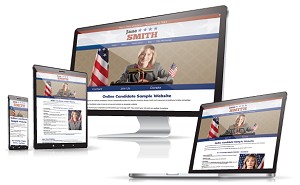
Once your campaign gets underway, there will always be something more urgent to do. Setting up your website early gives you a place to introduce yourself, explain your positions, collect supporters, and accept donations when you are ready.
Online Candidate can build and set up your campaign website for you, or you can create your own with our Monthly Campaign Website Builder starting at $29/month.
Incumbents Win on Habit—Not Always Popularity
One reason incumbents tend to have an electoral advantage is that they often have an established base that regularly votes. If you are a challenger or a new candidate on the scene, you have your work cut out for you.
A study of 340 mayoral elections in 144 U.S. cities found average voter turnout of just 25.8%.
With margins of victory that slim, getting as many supporters to mail in a ballot or show up at the voting booth makes all the difference in winning an election.
In low-turnout races, a small but loyal base can outweigh a larger but passive one.
A Real Example: When 200 Votes Decide an Election
For example, in our own area, there was a housing development issue in a small local municipality. A political newcomer challenged an incumbent mayor who had been in office for over a decade. The newcomer ran a traditional campaign with some yard signs and newspaper ads. She was against the new housing project that had been recently proposed but did not run heavily on that specific issue.
She lost the election. Decisively.
This was an off-year, low-turnout election. The local incumbent was popular and had a solid, predictable base of senior voters. He didn’t campaign hard and still won about two-thirds of the vote. On the surface, it was a solid victory.
Yet, the margin of victory was only about 200 out of 600 votes cast in a municipality with over 3,200 eligible voters.
So what could have provided the challenger with another 200 votes? The answer is simple — higher voter turnout.
Even strong messages fail without motivated voters to back them up.
The Missed Opportunity: Issue-Based Targeting
Remember that housing development?
It turns out that the new development was going to be built beside an existing subdivision. In that area, there were 150 households that would be directly affected by the construction. Most of those homeowners were not happy about the situation. Some had turned out at local board meetings to oppose the initial plan.
Mobilizing even a portion of those voters could have substantially narrowed the roughly 200-vote margin.
Unfortunately, the candidate did not reach out to specific neighborhoods. She could have gone door to door and/or sent targeted mailings to those households. Addressing the construction issue and promising to do something for those specific residents would have motivated a large number of otherwise apathetic voters to show up on Election Day.
“All politics is local.” – Thomas P. O’Neill
Modern Outreach Tools Expand Your Reach
If you can identify potential supporters and focus on an issue important to them, they can be turned into a motivated voter block.
In the age of social media, people are connecting online more than ever before. This has become a trend in local politics as well. In the past, candidates would have to reach out to voters in person, but .now they can connect with many more voters, even those who do not follow local politics. Social media has made it easier to reach out to their audience and provide them with a more personal messaging.
Social media is a great tool for outreach, but it’s limited without a paid advertising budget. You can reach voters through search advertising, paid social media, texting, direct household IP targeting, and other digital channels permitted by current platform rules.
People pay attention to what personally affects them. Targeted outreach that connects local issues to real lives motivates people to participate.
Converting Awareness Into Action
Local elections (and local primaries) are typically low-turnout affairs, but when they’re decided by only a handful of votes, increasing turnout can determine the outcome.
Traditional methods for increased turnout include driving people to the polling locations to help them vote.
Many voters can cast a ballot before Election Day through absentee, mail, or early voting options. Because the rules and deadlines vary by state and locality, campaigns should direct voters to official election information and make those resources easy to find on the campaign website.
To build a reliable voter base, connect personally, simplify voting, and keep communication consistent.
Final Thoughts: Your Campaign Hub Matters
Creating a local voter base starts with clear communication and consistent outreach. A well-organized online presence helps people learn who you are, where you stand, and how to get involved.
Your campaign website is the hub of that effort — making it easy for voters to find information, learn about issues, and take action when it counts.
Find out why Online Candidate can help you build a campaign website that helps you win.
Read More:



What To Know About Starting A Political Campaign »
Tags: local campaigns