The hardest part of running for office is asking for money.
Unless you’re independently wealthy or have a generous benefactor, you will need outside financial support to get your campaign off the ground. For many candidates, this is unfamiliar territory. If you’ve never had to ask someone for money before, it can feel uncomfortable, even intimidating.
It’s also unavoidable.
At Online Candidate, we’ve worked with hundreds of local campaigns, and one pattern is consistent: candidates who plan for fundraising early are in a much stronger position to compete in their election.
The Reality: Political Campaigns Cost Money
Running a campaign requires resources, even at the local level.
Get Your Campaign Website in Place Early
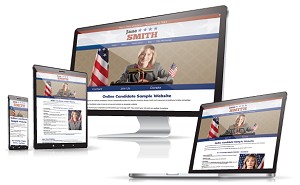
Once your campaign gets underway, there will always be something more urgent to do. Setting up your website early gives you a place to introduce yourself, explain your positions, collect supporters, and accept donations when you are ready.
Online Candidate can build and set up your campaign website for you, or you can create your own with our Monthly Campaign Website Builder starting at $29/month.
In recent election cycles, campaign spending has grown. Congressional candidates alone have raised and spent hundreds of millions of dollars. While local races are smaller in scale, costs can still add up quickly depending on the size of your district and how competitive the race is.
In our experience working with local campaigns, budgets often fall between $2,000 and $25,000 for smaller races, while competitive county or regional campaigns can exceed $50,000 depending on outreach needs. A town council race in a small district might only require a few thousand dollars. A county-level race or a competitive school board election in a larger district can quickly reach tens of thousands.
Typical campaign expenses include:
- Yard signs and billboards
- Direct mail printing and postage
- Advertising in newspapers, radio, and local cable
- Voter data and outreach tools
- Online advertising on platforms like Facebook
- Phone banking and text messaging
- Events and promotional activities
For example, a direct mail drop to 5,000 households typically ranges from $3,000 to $6,000 when printing and postage are included. Even a modest digital ad campaign can run a few hundred dollars per week, easily. (Social media is pay-to-play if you want any real exposure.)
Larger campaigns may also include staff salaries, office space, and travel expenses.
The reality is that candidates who can afford to communicate their message more frequently often have a large advantage over less-funded opposition.
We often see that campaigns who communicate consistently—through mail, digital ads, or community visibility—outperform those who rely only on word of mouth.
This is why it’s hard to be an incumbent politician. They already have a network of donors and infrastructure to reach them.
For many candidates, the fundraising process now starts with setting up a simple campaign website where supporters can learn more and contribute.

Better funded candidates typically win their elections.
How Does Fundraising Vary by Office?
The amount you need to raise—and how you raise it—depends heavily on the office you’re running for. It also depends on the size of your district and number of voters.
Local races are not all the same, and your fundraising approach should reflect that.
- School Board Campaigns
These are often lower-budget races, but still require funds for signs, basic mailers, and community visibility. Many rely on personal networks and small donations. A strong school board campaign website can help centralize contributions and make it easy for supporters to give. In many school board races, a majority of early donations come from personal contacts such as friends, family, and local community members. Many of our clients running for school board start with personal networks and gradually expand outreach as their campaign gains visibility. - City or Town Council Races
As districts grow, costs increase. Direct mail and digital advertising become more important, especially in competitive areas. A well-structured city council campaign website gives voters a place to learn more and take action after seeing your outreach. We frequently see campaigns at this level underestimate how many voter touchpoints are needed, which leads to increased fundraising pressure later on. - County-Level Offices (Clerk, Sheriff, Legislature)
These races often require broader outreach across multiple towns or regions. That means higher costs and more coordination. A dedicated sheriff campaign website or county campaign site helps manage messaging and collect donations at scale. Our clients running county-wide campaigns typically need to move beyond personal networks early and build a broader base of contributors to stay competitive. - Judicial Campaigns
Fundraising for judges is more structured and compliance-heavy, and depends on the jurisdiction. Messaging is often more limited or restricted by law, which makes name recognition critical. A focused judicial campaign website helps reinforce credibility and provides a central point for supporters. Because messaging is more restricted, judicial campaigns often rely more heavily on name recognition and professional networks when fundraising. - State Legislative or Congressional Campaigns
These campaigns require significantly more funding and a more formal fundraising strategy. Events, donor networks, and digital fundraising systems all play a role. Your campaign website becomes a key part of that infrastructure, supporting both outreach and online contributions. At this level, campaigns typically combine event-based fundraising with digital donation systems to scale contributions.
In every case, the principle is the same. The more voters you need to reach, the more resources your campaign will require. That’s why it’s important to have a central place where supporters can learn about your campaign and contribute.
Most campaigns now rely on a campaign website as a central hub for donations and messaging, and we’ve usually seen that candidates who set this up early tend to raise more consistently over time.
Fundraising by office varies significantly. The table below gives a quick comparison of typical budget levels and how campaigns usually raise money.
| Office Type | Typical Budget Level | Primary Fundraising Approach |
|---|---|---|
| School Board | Low | Personal networks, small donations |
| City/Town Council | Low–Moderate | Local outreach, direct mail, digital ads |
| County-Level (Sheriff, Clerk, Legislature) | Moderate | Broader donor base, structured outreach |
| Judicial | Moderate | Compliance-focused, reputation-driven fundraising |
| State / Congressional | High | Events, donor networks, digital fundraising systems |
Why Asking for Money Feels So Difficult
For most candidates, fundraising is the least enjoyable part of the campaign.
It’s natural to feel hesitant. You may worry about:
- Asking too much
- Asking the wrong people
- Being seen as pushy
Some political candidates even feel guilty asking for contributions. First-time candidates often delay fundraising because of this discomfort, which can limit their ability to fund outreach later in the campaign.
But it’s important to reframe what you’re doing. You’re not asking for money for yourself. You are asking people to support a campaign and a set of ideas they believe in.
Candidates who accept this early tend to have a much easier time fundraising than those who avoid the money issue.
What You Are Really Asking For
When you ask for a contribution, you are asking people to take part in something larger than themselves.
You may be running:
- To create change in your community
- To improve local conditions
- To provide better representation
- To give voters a stronger voice
These are the same reasons people may choose to support your campaign.
In a local race, that might be as specific as:
- Improving a school district budget
- Addressing zoning or development concerns
- Supporting local businesses
- Enhancing public safety
More than just giving money, a donation is a way for supporters to participate in those outcomes. In many local campaigns, early donors often become repeat supporters and may also volunteer or advocate on behalf of the campaign.
How to Approach Campaign Fundraising
As difficult as it may be, asking for support becomes easier when you approach it with purpose.
A few practical points can help:
- Be clear about what you are asking for
Don’t be vague. Ask for a specific contribution or action. - Explain how the money will be used
For example: printing mailers, running local ads, or funding outreach efforts. - Connect the request to the donor’s interests
If someone cares about a specific issue, show how your campaign addresses it. - Be direct and respectful
Most supporters understand that campaigns require funding.
For example, instead of a general request, you might say:
“We’re sending out a round of mailers to reach voters across the district. A $50 contribution helps cover printing and postage for a portion of that effort.”
Or in a smaller race:
“We’re ordering yard signs for key intersections in town. A $25 donation helps us place another sign where voters will see it every day.”
This makes the request concrete and easier to understand.
What We See in Successful Campaigns
At Online Candidate, we’ve worked with hundreds of local campaigns, and certain fundraising patterns show up consistently in campaigns that win at the ballot.
- Campaigns that launch a website with a donation option early tend to raise their first contributions within days, not weeks.
For example, we worked with a first-time city council candidate launch their site and share it with about 40 personal contacts. Within the first week, they raised just over $400 in small donations, which was enough to fund their initial yard sign order. - Most early fundraising comes from personal networks, but successful campaigns expand beyond that quickly.
In one school board race, a candidate raised their first $1,200 almost entirely from friends and family. Growth stalled until they began promoting their campaign through local Facebook groups and community events, which brought in new donors outside their immediate circle. - Specific asks outperform general requests by a wide margin.
We’ve seen campaigns switch from general donation requests to specific ones like “Help us fund a 5,000-household mailer,” and increase response rates noticeably because supporters understood exactly where their money was going. - Campaigns that delay fundraising often struggle to afford outreach later.
In several local races, candidates waited until the final month to begin fundraising and were unable to raise enough in time to execute planned mail campaigns, even though they had strong community support. - Simple online donation systems significantly increase conversion rates.
Campaigns using streamlined donation pages—where supporters can give in under a minute—consistently capture more $10–$50 contributions compared to campaigns that rely on manual or offline methods. We’ve helped clients integrate all types of fundraising and donation platforms into websites. - Consistent outreach drives consistent fundraising.
For example, a town council campaign that sent weekly email updates and followed up with past donors raised steadily over a two-month period, while another campaign that only made two large fundraising pushes saw short spikes but lower overall totals. - Visibility and fundraising are directly connected.
We’ve seen campaigns invest a few hundred dollars in early digital ads and signage, which increased website traffic and led directly to more online donations within the following weeks.
Why You Can’t Avoid Paid Outreach to Voters
Unless your district is extremely small, it’s difficult to run a successful campaign without paid outreach.
Even in local races, you need to reach voters multiple times. That usually means a mix of:
- Direct mail
- Digital advertising
- Community visibility (signs, events, materials)
Most campaigns require multiple voter touchpoints before voters recognize your name, which increases the need for consistent funding throughout the campaign.
All of this requires funding. That’s why candidates spend a significant amount of time:
- Making calls
- Meeting supporters in person
- Sending emails
- Following up with potential donors
In many campaigns, a significant portion of fundraising comes from direct outreach such as phone calls and personal follow-ups.
In some cases, political groups, PACs, or local organizations may contribute or support your campaign. But you cannot rely on that. Most campaigns need to build their own base of donors.
Fundraising Has Changed
In the past, contributions were often made by check or in person. Today, online tools have made fundraising more accessible.
Supporters can contribute quickly through a campaign website, and online donation platforms can track contributions efficiently. This helps with organization and reporting, which is especially important as campaigns grow.
We’ve consistently seen that campaigns offering simple online donation options reduce friction and capture more small-dollar contributions from supporters.
However, the responsibility still falls on the campaign to:
- Ask for support
- Make the process easy
- Provide the necessary information for compliance and reporting
Campaigns that make donating simple and clear tend to see better results.
What This Means for Your Political Campaign
No matter what office you’re running for:
- You will need to ask for money
- You will need a clear plan for how to raise it
- You will need a simple way for supporters to contribute
Campaigns that set up their fundraising infrastructure early—including a campaign website and donation system—consistently perform better than those that delay.
Fundraising is rarely anyone’s favorite part of running for office. But, like it or not, it is one of the most important. If you want to compete, you need the resources to reach voters and share your message. That starts with being willing to ask for support.
But with the right mindset and a clear approach, fundraising becomes less about discomfort and more about building support for something meaningful in your community.
If you’re planning your campaign, one of the first steps is making it easy for supporters to learn about you and contribute. Online Candidate provides campaign website packages designed specifically for local candidates, including built-in donation integration and simple setup.
You can get your campaign website online quickly and start accepting contributions within days, not weeks.
Read More:



Comparing Political Donation Platforms – Our Recommendations »
Tags: fundr, local politics, political donations, seed money